Roofing

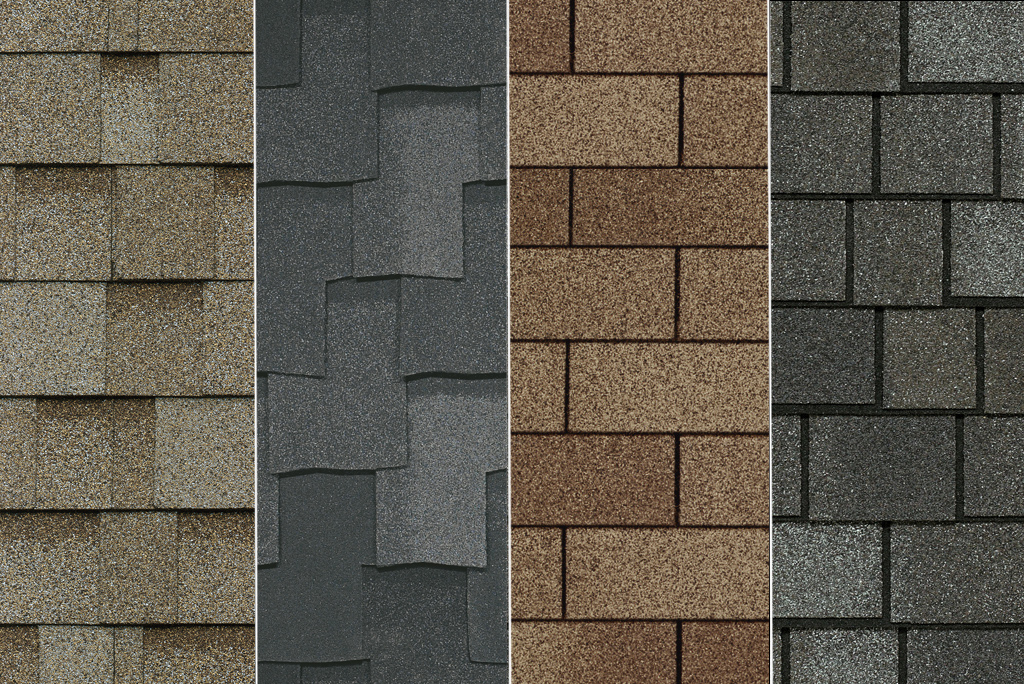
Shingle Styles and Colors

A shingle is a type of roofing material that is made up of individual overlapping pieces. The most common type of shingle is asphalt, but there are also varieties made from wood, slate, and metal. One of the main benefits of shingle roofs is that they are relatively easy to install, which makes them a popular choice for both new construction and repairs. In addition, shingles are widely available and come in a variety of colors and styles to match any home. One downside to shingles is that they typically have a shorter lifespan than other roofing materials, and they can be damaged by high winds or flying debris. As a result, it is important to have your shingle roof inspected regularly by a qualified professional. With proper care, however, a shingle roof can provide years of protection for your home.

Choosing right shingle color


Shingle Style

The Shingle style was developed in the late 19th century as a reaction to the highly decorated Victorian architecture of the time. The style is characterized by its simplicity and use of natural materials, such as wood shingles. Shingle-style homes often have gambrel roofs and wraparound porches, and they are often built on a Coastal New England site. The spacious and informal floor plans of these homes make them ideal for family living. In addition, the use of native materials helps to blend the home into its surroundings. Today, the Shingle style is enjoying a resurgence in popularity, as more and more people are seeking out homes that offer a relaxed and comfortable lifestyle.

Different Types of Shingles

The most common type of roofing material is asphalt shingles. They are made of fiberglass or organic matting, which is then coated with asphalt and covered with mineral granules. Asphalt shingles are durable and inexpensive, making them a popular choice for both residential and commercial buildings. However, they are not the only type of shingle available. Wood shingles are another option, though they are not as fire resistant as asphalt shingles. Metal shingles are also available, but they are more expensive than other options and can be difficult to install. Ultimately, the best type of shingle for your home will depend on your budget and your climate. If you live in an area with high winds or severe weather, metal shingles may be the best option. Otherwise, asphalt shingles are a versatile and affordable choice.

Advantage of Shingles

There are many advantages that shingles have over other roofing materials. Here are just a few of the reasons why shingles are a great choice for your home or business:

Shingles are easy to install and repair, which means that you can save money on installation and repairs over time. They are also designed to withstand high winds and heavy rains, making them an ideal choice for areas that experience severe weather conditions. In addition, shingles come in a variety of colors and styles, so you can find an option that compliments the look of your home or business.

If you’re considering a new roof for your property, be sure to add shingles to your list of options. With their durability, easy maintenance, and aesthetic appeal, they are sure to provide you with years of enjoyment.

What are Shingle Colors?

Shingle colors are very important in terms of the overall look of your home. You want to make sure that the color you choose compliments the exterior paint job or trim on your home. However, there are other factors to consider as well. For example, if you live in an area that gets a lot of sun, you might want to consider a lighter-colored shingle. Lighter colors tend to reflect more light and heat, which can help keep your home cooler in the summer months. If you live in an area with a lot of trees, you might want to consider a darker-colored shingle. Darker colors tend to absorb more heat, which can help keep your home warmer in the winter months. Ultimately, the best way to choose a shingle color is to consult with a professional contractor or roofing specialist who can help you select the perfect color for your home.

The Shade of a Shingle

The type of asphalt shingle you choose for your roof will have a significant impact on the overall look of your home. One important factor to consider is the shade of the shingle. Darker shingles tend to absorb more heat, making them more prone to warping and fading over time. lighter shingles reflect more light, helping to keep your home cooler in the summer months. And while many homeowners prefer the classic look of black or charcoal shingles, there are now a wide variety of colors available, from bright primary colors to more subtle earth tones. So no matter what look you’re going for, you’re sure to find a shade of asphalt shingle that will suit your needs.

Most Popular Shingle Color

The most popular shingle color is black. This dark shade is associated with power and strength, making it a good choice for roofs that need to be sturdy and weather-resistant. Plus, black shingles have a classic look that goes well with both traditional and modern architecture. If you’re looking for a shingle color that will make your home stand out from the crowd, black is a great choice.

How Do I Match the Color of My Roof Shingles?

When trying to match the color of your roof shingles, it is important to keep a few things in mind. First, the color of your shingles will change over time as they weather and age. Second, the color of your shingles can also be affected by the type of material they are made from. For example, asphalt shingles will usually be darker than ceramic or metal shingles. Finally, the color of your shingles can also be affected by the lighting conditions in your area. For example, if you live in an area with lots of sunlight, your shingles will likely appear lighter than if you live in an area with more shade. With these factors in mind, here are a few tips for matching the color of your roof shingles:

1. Try to match the color of your shingles to a sample swatch from your local hardware store.

2. If you can’t find an exact match, try to find a shingle that is close in color to the one you’re trying to match.

3. If all else fails, you can always paint your shingles to match the color you’re looking for. Just be sure to use high-quality exterior paint that is designed for use on roofs.

sheet metal roof rip architecture roof building sheet pattern metal

How do you Walk on a Metal Roof?

Most people never have to risk their safety to venture up into their property’s roof. However, some may be tempted to do so in order to spot the source of a leak, fix-up some minor roof damage, remove debris, or clear up the gutters. While we advise homeowners to seek the help of a professional to do these minor tasks since it is not safe to get up on a roof, there are still many DIY homeowners who prefer to do these things by themselves. Thus, we are here to provide essential safety tips to help prevent any untoward accidents from happening.

how do you walk on a metal roof

Here is some important safety information to keep in mind before you try climbing up your metal roof.

Back in the 1800s and early 1900s, metal roofs were a popular residential roofing material. Now, metal roofs are more commonly found atop commercial buildings. Back in the day, however, many homeowners found themselves walking on old metal roofs to apply sealers and nail loose sheets down. Today, metal roofs are more leakproof, rustproof, and low maintenance. But, that doesn’t mean that no one ever needs to go up there.

There are still some times when there is a need to walk on the metal roof to inspect, assess, or repair it.

Before doing so, however, you should first check the condition of the interior of the roof before you climb up. If it is a metal roof on a garage, barn, porch, carport, or shed, you should be able to do this. Be on the look out for rotted beams, or broken or missing lathe boards or sheeting, along with other signs that the roof is soft in places. If there are any areas where the roof is not well supported, then it is best not to risk it. If there is any damage on the interior of a metal roof, the added weight of a person on the roof could cause the structure to collapse.

If all seems to be in good shape, then you can go ahead with your task. However, here are the essential Metal Roof Safety Walking Tips.

  • It is best to wear soft, rubber-soled shoes to get the best traction. 
  • It is important to position your ladder as close to where you need to be on the roof. However, you should place it away from any known weak spots. The ladder should extend at least 3 feet above the roof edge. This is so that you have something to hold onto. 
  • When you climb up the ladder, be sure to step carefully onto the metal. Old metal roofs usually have a certain amount of give. It is best to expect that.
  • Proceed to walk safely on the metal roof by staying on or at least near the rafters. These areas will feel solid underfoot, Rafters are normally located 16 to 24 inches apart. 
  • Avoid walking on the seams.
  • When you walk up the roof, lean your body over towards the roof to help maintain your balance. 
  • You will need to lean over more on a steeper metal roof. 
  • Crouch down slightly to walk down a metal roof safely.
  • Walk up or down a slightly inclined roof by walking as you would on the ground. However, this should be done slowly. 
  • When on a steep roof, it is best to walk sideways.
  • Use a roof safety harness to walk safely on a roof if it’s in poor condition or if it’s very steep. The harness should attach you to the roof to prevent you from falling if you lose your footing. It is imperative that you follow the directions on how to put the harness on according to the instructions from the manufacturer because each brand can vary. Double check to be sure that it fits tight and don’t forget to check the harness buckles.

Warning!

Some roofs are too steep for the average person to walk on comfortably, and it is best to leave steep-slope roofs to the professional. The same is true of tile and slate roofs. Both can be damaged easily, and loose pieces can cause falls. If you have a roof that is not too steep, and one with a surface that can be safely walked on, follow these guidelines.

Related Articles

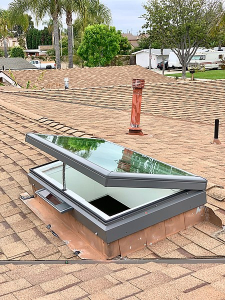
Venting Solar Powered Glass Skylight

Replace Skylights with New Roof

When getting a new roof replacement, you may start wondering what other things you should replace on your property. If you have skylights on your roof, your roofer has probably suggested getting your skylights replaced along with your roof. While you might suspect that this suggestion was an upsell from your roofer, you can actually find that there are a ton of benefits that comes with replacing skylights with your new roof.

There are a lot of people who are just not yet prepared to pay for a roof replacement and a skylight replacement all at the same time. There are even those who think that doing these 2 projects together will end up being a waste of money. But should a roof replacement and a skylight replacement be done together or separately?

replace skylights with new roof

When you first look at a skylight, it appears to be a rather simple structure of framed glass. However, skylights are actually a more complex and modern technological product. These are structures which are often exposed to wind, solar radiation, and sudden changes in temperature, rain, snow, and hail. Thus, skylights need to be rigid and have heat-insulating properties throughout their lifespan. On top of that, skylights also have to look good.

In summary, skylights are a high-tech product that should be changed when it’s getting old or start to not work properly.

Below are just some of the main reasons on why you should replace your skylights when you replace your roof.

You can Save Money

Replacing your skylights when you get a new roofing system put in is probably the most convenient, efficient, and affordable time to do so. Many roofers may end up charging you up to double the rate they offer now to come back to replace your skylights alone if it is done separately from replacing your roof.

Because your roofer will already be on your roof, working on your roof and your skylight in one go is actually much more efficient. Thus, the lower cost of labor. 

Comparing Risks and Rewards

When you consider the cost of reflashing your home skylights, which would be between $200 – $600 per skylight, the total cost of replacing your skylights would range from $800 to $1500 depending on the type of skylight. 

If your roof has multiple skylights, you might get a better deal. But if you really want to save more in the long run, getting your roofers to work on it in one go is a larger investment now but will end up saving you a lot more in the future.

Avoid Skylight Seal Failure

If you replace your roof but not your skylights, you might experience seal failure. This is signalled by having fogged and inefficient glass on the skylight. When your new roof is put in, roofers working on your property might end up loosening the seal on the skylights when they install the new shingles. 

Using old skylights with a new roof can cause leaks.

Even if your skylight has been near perfect in the past years, there is a high chance that you’ll experience roof leaks following the installation of your new roof. No matter how skilled your contractor may be, ruffling with that old skylight can cause problems.

Many homeowners are not aware that building materials end up expanding and contracting over time depending on the temperature and weather conditions. Additionally, in order to install a new skylight, the whole structure needs to be disassembled and put back together. This process can create many problems in the structure of the skylights if they have started to corrode. Not to mention, re-flashing an existing skylight can void its warranty.

Replacing a skylight is inevitable.

Skylights have a short warranty for a reason. The inexpensive plexiglass bubble skylights often crack easily, especially when exposed to fluctuating temperatures. However, even the high-quality skylights start to warp over time. Why not prevent the costly replacement later on by getting a package deal much earlier?

In summary, you should replace skylights with a new roof because…

  • saves money long term
  • prevents seal failure
  • brings in daylight and fresh air.
  • resolves rotting issues
  • improves energy efficiency

The most convenient and affordable time to replace a skylight is when you are installing a new roof. By replacing your skylights when you replace your roof, you’ll save money in the long run and ensure you won’t be paying for a new roof twice! 

Related Articles

two person putting roof tiles on roof at daytime

What is a Tear Off Roof?

If you can’t remember the last time you had your roof replaced, it might be time to get a new one, especially if you’ve been experiencing constant and recurring problems with it no matter how many times you’ve had it repaired. While regular maintenance and repair are key to extending your roof’s lifespan, every roof reaches the end of their use and reaches a point in time when it needs to be replaced.

Many homeowners try to postpone the inevitable need for a new roof. It is not surprising since getting a new roof can be an expensive endeavor. While it will cost you, your roof is essential in protecting your home and your family. If left to deteriorate, it could end up collapsing and damaging the rest of your property and endangering those that live in your home as well. Thus, when it comes to roof maintenance, repair, and replacement, you should want to make sure you get it done right.

what is a tear off roof

One of the things that a lot of people don’t actually know about roofing is that when you get your old roof replaced with a new one, you can actually choose 2 reroofing options. The first option is known as a roof overlay. The second option is doing a complete tear off of the old roof.

On one hand, a roof overlay means that the new roof will be installed over the existing roof. Think about it as adding another layer of shingles on top of the old set of roofing shingles on your home.

On the other hand, a roof tear off refers to the process of stripping down the old roofing materials and replacing it with a whole new roofing structure. This means replacing more than just roofing shingles. Usually, this includes putting in a new underlayment and other supporting structures. With a tear off roof, you end up getting a brand new roof. 

Between these 2 options, it seems like the tear off roof may be a better thing to do. However, each method actually offers a different set of advantages and disadvantages that you’ll need to consider. By understanding the pros and cons to both overlay and tear off roofing, you can better decide which option might work best for your home and budget.

Tear Off Roof

If you ask a roofer, most would recommend getting a tear off roof. The process involves taking off the old roofing structure. From the shingles to the waterproof barriers that protect the underlying structure. The name says it all – the old roof is torn off completely before a new roof is put in. 

The advantages of having this done is that it provides a full roof replacement, better roofing quality, a longer lasting structure, and added value.

When you decide to get a tear-off roofing job, your brand new roof will be exactly that: new. Everything will be as if it were a completely brand new roofing system, which provides a lot of advantages. If your property had any rotten decking or roof leaks, these problems will be gone when your new roof comes in. Because the roofers have to tear off all of the old roofing shingles, they also get a clearer view into what’s happening with your roof. This allows them to make any interior repairs which wouldn’t be possible if you simply did a roof overlay. Thus, the finished product will be perfect.

Also, because the entire roof will be replaced, your roofers will be able to make any repairs on high risk areas. Additionally, new flashings can be installed. This will ensure that your home is kept watertight and secure for the many years to come.

The main cons to a tear off roof, however, is that it costs more. Because roofers have to take time to tear down the old structure, which could take a full day or more, there are higher service costs. Additionally, more materials may be needed as hidden damages come into light.

Roof Overlay

The main advantage to getting a roof overlay is that it costs much less than a tear off roof. Since you’re simply adding another layer of shingles on top of the old roof, your labor costs will be considerably less. This is also why most people decide to opt for the overlay method.

Additionally, your house will be under construction for a much shorter period of time. This is great if you need a new roof immediately, or if you don’t have a lot of money to spend on lodging for the duration of the project.

The main problem with getting a roof overlay is that it won’t last as long as the first tear off option. Generally speaking, roof shingles laid over your old roof won’t last as long as their expected natural lifetime because of the extra heat trapped in between the old and added layers. It also adds more weight to the roof’s supporting structure. The new roof counts as another roof that adds weight to the top of your home. This can put the structural integrity of your whole roof into question.

Whether you finally decide to choose a less expensive and more affordable overlay option, or just bite the bullet and have that old roof torn off, Waddle Exteriors should be your first call! Our team will visit your home and properly inspect your roof and give you our honest assessment. 

Related Articles

best roofing material for flat roofs

Best Roofing Material for Flat Roofs

When you have plans to replace the roof on your business, you are probably thinking about a lot of things. Replacing your roof, especially a commercial roof, is no easy task. If you are in the process of getting a new roof for your business or one of the properties that you manage, you need to do your due diligence in researching and learning about the best flat roofing materials that will fit the needs of your company and your budget as well.

Think of it as an investment, if you don’t put much thought into it, you might end up losing out in the long run.

Replacing a roof may seem like an expensive venture. While it definitely isn’t free, there are several ways to adjust the costs of a new commercial roof. One way is to choose the best roofing material. 

best roofing material for flat roofs

How do you choose the best roofing material?

There are so many options for roofing. You might think that all roofs are the same but when you look at different properties, you’ll notice that there are a ton of different options for commercial roofing. This is one of the reasons why getting a new roof is so difficult. However, Waddle Exteriors can help. We are a roofing team specializing in both roof repairs, coatings, and total roof replacements. If you are looking for a really good roofer, contact us as we are known as one of the best roofing companies in ames iowa

When you go through the different kinds of roofing material types, the things that you need to know about each type of roof material include the following:

Lifespan

When choosing a roofing material, it is important to take into consideration just how long the roof will last. Different materials have varying lifespans. By knowing the lifespan of these materials, you’ll be able to assess how long you’ll have until you need to replace your roof again. Think of it like this, a roof may seem cheaper now but if that material will only last 10 years, would you rather get the cheaper option or another alternative that costs only a bit more but can give you 30 years of use?

Material Cost

While the cost of materials will depend on the manufacturer and other factors, there are average prices per square meter of material. Since you’re looking at a new roof for your business, this may play a large role since you definitely would want to stay within budget.

Installation Cost

Aside from paying for the materials of your new roof, you also have to pay for the labor cost of installing the structure. This varies greatly because the method of installation will depend on the type of roofing material and the style of roofing. When you have some top choices on the kind of roofing material you are interested in, you can get an estimate of the installation cost of these materials from your roofer. 

Ease of Maintenance

Another thing to consider is how a roofing material should be maintained. Some types of roofs may require more regular maintenance while others require a minimal level of maintenance. Maintenance may not seem like an important factor to consider but if you’ll be having that roof on your property for next few decades, the cost of maintenance will add up over time, especially if it needs to be done consistently.

Types of Roofing Material

PVC Roofing

For most projects, PVC roofing is a commonly preferred choice and is known as one of the best flat roof materials available on the market. However, PVC roofing is actually more expensive than all the other single-ply commercial roofing materials. 

PVC Roofing offers an extended range of advantages for its high cost. First of all, the reinforced membrane makes PVC roofs more resilient against impact damage and the cracking that often comes with it, which normally shortens the lifespan of most roofs. PVC roofing is one of the best flat roofing materials for 2 main reasons – it is low maintenance and offers a long lifespan. 

Metal Roofing

One of the ideal choices when it comes to buildings with slopes measuring more than 2 inches is the use of commercial standing seam metal roofs. Metal is different from many other commercial roofing materials for a number of reasons. 

First, metal roofing has the longest lifespan. A metal roof can last between 20 and 30 years. This is because metal is an extremely durable material which makes it immune to cracks that usually affect other single-ply roofing materials. One downside, however, is that metal roofs are more susceptible to leaks around the roof edges, ridges, and seams.

TPO

TPO is a very popular type of roofing commonly used on flat roofs. Compared to metal roofing and PVC roofing, TPO is considered as an inexpensive option. It offers a decent lifespan lasting between 10 to 20 years. On top of that, these white-coat roofs also offer the same energy saving properties as PVC roofs. They also require less maintenance than EPDM roofs.

Modified Bitumen Roof

When compared to other commercial roofing materials, modified bitumen stands out as the more-budget friendly option. Modified bitumen roofs use an asphalt membrane as the base of the roof itself. This surface is susceptible to cracking and blistering which reduces the typical lifespan to just 10 to 15 years. While the lifespan is less than the more advanced options, the price point alone can make modified bitumen one of the best flat roof materials for some businesses.

If you know you need a commercial roof replacement, we’re the team to trust. At Waddle Exteriors, we have experience with all kinds of commercial roofing materials.

Related Articles

how long do roof shingles last

How Long Do Roof Shingles Last?

If you are an up and coming home owner who is currently in the process of purchasing your next home, you are probably curious to find out how to know the age of a property’s roof and what the expected lifespan of these structures are. 

If you are already a homeowner who has lived in your property for a while, you might still be wondering when your roof is due for a replacement. 

Whether you are looking to purchase a new property or just looking to maintain your current one, knowing the age of a roof is important. And you are now probably wondering

“How long do roof shingles last?”

Lucky for you, this guide provides a list of expected lifespans for a variety of roofing systems commonly used on residential properties. 

Common types of roofing systems discussed include asphalt shingles, metal roofing, concrete or clay tiles, cedar shingles and shakes, slate roofing, composite roofing, epdm rubber, pvc and tpo roofing membranes.

Asphalt Shingles

Most asphalt shingle roofs last between 15 to 25 years before they show any tell tale signs of needing a roofing replacement. This lifespan, however, is dependent on the specific type of asphalt shingles. Differing on thickness, durability, longevity, aesthetics, and cost, there are 3 main kinds of asphalt shingles in the market – 3 tab shingles, architectural shingles, and premium shingles. Aside from the kind of asphalt shingles used, the quality of the roofing installation, as well as the regularity of roofing maintenance are also key factors to consider when calculating roof longevity.

The most basic type of asphalt shingle is the 3 tab shingle. It is also the least costly among the 3 options. A typical 3-tab asphalt shingle roof will last anywhere from 10 to 20 years but are not as durable as the other alternatives. This type of shingle is prone to developing cracks and having a greatly diminished lifespan when exposed to strong and direct sunlight as well as rapidly changing temperatures. 

Architectural shingles which are also known as dimensional shingles are a thicker alternative. Because of its thickness and added weight, this type of shingle is also more durable and can last longer, typically having a lifespan of 15 to 25 years, However, this is also dependent on the surrounding environment. 

Lastly, premium shingles are usually used on premium homes because they offer a fancier looking aesthetic thant the previous types discussed. A premium shingle is normally thicker and will last longer than a mid-range architectural shingle. The expected lifespan of this type of roofing shingle is between 2 to 3 decades, also depending on the environment.

Metal Roofing

There are different types of metal roofing options for residential properties. While metal roofing is commonly used for commercial properties, more modern homes are taking on metal roofs due to their low cost, easy maintenance, and modern appeal.

One of the more popular options to residential metal roofing is the use of standing seams. This is a type of metal roofing system that relies on concealed fasteners. When properly installed, standing seam metal roofing structures can last 30 to 50 years. 

The lifespan of a metal roof also depends on the type of metal being used on the property. The use of premium metals, such as titanium, stainless steel, copper, and zinc will allow your metal roof to last well over 100 years.

Another popular option for residential metal roofing is the use of metal shingles. These are a less expensive alternative when compared to standing seam metal roofing but can actually offer nearly the same level of durability and longevity. 

An even more affordable option is the use of ribbed metal panels. These panels are especially preferred if you have a steeper gable style roof. Ribbed metal panel roofing can give your roof between 25 to 40 years.

Concrete and Clay Tiles

When you look at premium homes in your area, you’ve probably seen many of them sporting concrete or clay tiles. The use of clay tiles is an excellent and classic choice. However, clay tiles are quite heavy and require a special roofing frame in order for the structure to support the added weight. This might add on to the high cost of this type of roofing but the use of clay tiles provides homeowners of a lifespan of 50 years to a full century. 

Concrete tiles are similar to clay tiles in many regards including their heavy weight. They are however a less costly tile roofing option, with an expected lifespan of 40 to 75 years.

Cedar Shingles and Shakes

Comparable in cost to metal roofing, cedar shingles and shakes are a common roofing option for beach homes and cape code style houses. Cedar shake roofs are designed to last 20 to 35 years on average. With regular maintenance, however, a cedar shake roof can last around 40 years.

Natural Slate

Slate roofs are notoriously expensive, heavy, and long-lasting. A quality slate roof can last anywhere from 50 to 100 years. Slate roofs have excellent wind uplift properties, but a few pieces of slate flying off of a roof during a hurricane can be dangerous due to their weight and sharp edges. 

Composite Roofs

Synthetic composite shingles and tiles are made to resemble natural slate tiles and cedar shakes. Composite tiles are strong, light-weight, and with proper installation can last 30 to 50 years or longer. Cost-wise, they are comparable to standing seam metal roofs.

Related Articles

roof is leaking what to do

Roof is Leaking What to Do?

If you’ve started to spot water stains spreading across your home ceiling or even running down your walls, there is probably one main culprit to this issue – a leaking roof. It might seem to be an obvious find when someone says that their roof is leaking but, often times, roof leaks can actually be quite difficult to spot. Sure, there is the roof leak that just starts dripping on the top of your head. Those ones are definitely obvious. However, sometimes your leaking roof may not be penetrating your ceiling just yet. And when the water starts to collect on the top of your ceiling, that is when you start to spot those little brown spots which we call water stains.

When you start to see actual water dripping down your ceiling, this is a sure sign that the problem has been affecting your roof for quite a while now. A leaking roof is not a minor issue – it is usually a sign that there is some underlying damage that needs to be addressed. It could be something like a hole in your roof that needs patching up, faulty plumbing that needs to be fixed, or it could also be a number of other reasons.

roof is leaking what to do

No matter what the reason, the first thing to do when you notice a leaky roof is to catch the dripping water. There isn’t much discussion needed for this step since most people do this right away. You might not enjoy putting those buckets around your home when your roof starts to leak, and it is even more bothersome to empty those out when the leak starts filling the bucket up. But, this is something that needs to be done for these main reasons. 

First of all, it prevents anyone in your home from slipping. Dripping water on your floor will make it a hazard and if you have any kids or seniors around the home, they might slip if you don’t take this precautionary measure. The second thing is that it prevents damage to your floor. Whether you have hardwood flooring, carpets, or laminated floors, it will not fare well with water flooding it. Cover up that area and put a pail or bucket to catch the water from your roof. The last reason is to help you identify where the leaks are coming from. Most of the time, a leaking roof becomes obvious when there is rainfall. But, when the rain stops, the leak might stop as well. This doesn’t mean you no longer have a problem in need of fixing.

Don’t put away those leak buckets just yet. You can use those as markers to let your roofer know exactly where the leaks are happening. If you don’t want to walk around the house with a bunch of buckets around, you can also get a small tape and mark those areas on your ceiling or your floor. The important thing is that you are able to leave a guide so that your roofers will know exactly where the main issue is.

If the roof is leaking directly above large furniture, we suggest moving the furniture out of the way. If this is not possible, place a large protective cover over your furniture. It’s the same thing with your floors, you wouldn’t want to damage your furniture, would you?

After this, the next thing to do is to call your local roofer. Fixing a leaking roof may seem as simple as patching up that part of the ceiling but doing this is only a temporary fix. After a while, you’re likely to notice water dripping from that spot again. If you really want to fix a leaking roof, the best thing to do is to call in the experts and have them assess your property. 

The first thing they will do is identify the main cause of the roof leak and provide you with possible solutions to choose from. Depending on the type of leak and the extent of damage, it could be a simple roof repair or some work that needs to be done on your plumbing. You’ll know after they thoroughly inspect and identify the source of your roof leak.

If you’re not keen on the extra costs that come with repairing a leaking roof, be sure to take pictures of the damage for your insurance claim. 

If you’re looking for peace of mind, Waddle Exteriors is the best option with years of experience as roofing contractors.

Related Articles

what is a built up roof

What is a Built Up Roof?

There are so many different types of roofing options readily available to home and business owners like. So many that actually making a choice on the type of roofing to install on your property can be a lot harder than most people expect. Many people would prefer installing wood shakes or asphalt shingles for their sloped or gable roofs but these are not viable options when you have a flat roof. What type of roofing is a good option to consider when planning a new roof for your flat roof?

It may seem like there are limited options when it comes to flat roofing but when you actually look at different materials in the market, you’ll find that there is just as much variety in the kinds of flat roofing as there are in sloped roofing – maybe even more!

Choosing the type of flat roof to install on your property is no easy task. An easy way to go about it is to look around your area and observe the different kinds of flat roofs. You’ll easily see that there are quite a few common options around. One material that is quite common when you look at flat roofs is built-up roofing material. Built-up roofing is also known as a BUR system is actually suitable for either flat or sloped roofs but is more commonly used for flat roofing or low sloped roofs. Whether you are picking a roof for your home or business, this type of roofing is also suitable for both residential and commercial properties, although it is more frequently used in the latter.

In order to understand all the perks that a BUR system provides, it is best to answer these questions.

  1. What is built-up roofing?
  2. What are the types of built-up roofs?
  3. What is the lifespan of a built-up roof?
  4. Why should you choose BUR?

What is built-up roofing?

A popular roofing option way back in the 1970s, BUR roofs are also known as gravel or tar roofs because they are made up of alternate layers of tar, coal tar, reinforcing fabrics and bitumen or asphalt. At the top, the roof is finished off with an aggregate layer made of stone or gravel. Reinforcing fabrics that are often used include fiberglass or organic mats. At the surface, other materials are also incorporated to add certain properties. These materials include hot asphalt, elastomeric coatings, fibreglass, mineral-surfaced cap sheets or aluminium coatings. It’s the most suitable option for flat roofs and buildings with low slopes as it creates a continuous sealed surface.

What are the types of built-up roofing?

There are 3 different types of built-up roofing. These are Ballasted Asphalt Built-Up, Hot Built-Up, and Cold Built-Up.

Ballasted Asphalt Built-Up

Ballasted Asphalt BUR systems are not anchored to the roofing membrane. While this may seem like the roof  would not be stable, it is actually still a very durable and long lasting roofing option. The surface of this type of roofing has loose gravel which is spread over the deck. Strong winds may seem to threaten to move the gravel and expose the underlying material, however this will not happen because the stones and gravel used for this purpose are large in diameter. To ensure excess movement, a thick layer is applied with plates and fasteners in various locations.

One of the advantages of this type of roofing is that it is easier to install and can actually be put together in any weather condition making it a good alternative if you’re looking to get a quick installation under usually unviable conditions.

Hot Built-Up

Hot BUR systems undergo a liquefaction process. Thus, it is termed “hot” built up roofing because of the process of melting the materials during installation. This process makes it harder to install because roofers have to work with heated materials. However, the advantage is a more compact and sleek roof. 

Cold Built-Up

This type of BUR can be sprayed on or applied with a squeegee. No toxic fumes are involved, and changes in weather conditions don’t affect its application.

What is the lifespan of a built-up roof?

There are different types of BUR systems and each one offers a different lifespan. However, the average lifespan that you could get from this type of roofing is between 15 and 30 years. This will also be highly dependent on the materials used and the usual weather conditions of your area. When installed properly, some built-up roofing systems can last up to 40 years. 

BUR systems last longer in warmer climates than cooler ones. The lifespan of this type of roof is comparable to that of another common roofing option – asphalt roof shingles – which also last up to 3 decades on average.

Why should you choose BUR?

Here are some great reasons why you should choose built-up roofing for your property.

  1. Exceptional Durability
  2. Ease of Maintenance
  3. Excellent Water Resistance
  4. Fire Retardant
  5. Energy Efficient

It is essential to understand the materials and the type of roofing you are choosing before having it installed on your roof. With a built-up roofing system, its durability and longevity depend highly on the materials used, type of installation, and the workmanship of your roofers. If you’re thinking of replacing your roofing system, consider BUR as it’s an option that’s been tested by many property owners but you have to make sure you hire an experienced professional roofing contractor, like our team at Waddle Exteriors, as we will do the job properly the first time.

Related Articles

standing water on flat roof

Standing Water on Flat Roof

If you are a homeowner or business owner with a property sporting a flat roof, you have probably been noticing some problems that aren’t quite common as when you have a sloped or gable roof. A common issue with flat roofs is that water tends to form ponds or puddles due to the inability of water to naturally drain away from the flat roof with just the aid of gravity. Instead, flat roofs rely heavily on the installed gutter system. So, if you own, or manage, a building with a flat roof, you may have noticed an issue with ponding water. 

standing water on flat roof

Unfortunately, aside from having problems with the gutter system, there is also the chance that the thing causing standing water on the flat roof is the design of the roof itself. Flat roofs have a low slope but are not completely flat, which is why water still flows into the gutters. When a flat roof is not designed properly, then water tends to stand in lower end areas. Usually, these are the points where water collects and where most roofers put in an efficient drainage system. However, when the drainage and gutter system are not installed effectively, water will end up ponding every time there is rain or snow.

What is Standing Water?

Standing or ponding water is a common thing when it comes to flat roofs. Right after a storm or when the snow starts to melt, you’ll likely find water on your flat roof. However, this is not a problem until the water does not drain or evaporate after 48 hours. When you still find water on your flat roof after a few days, then you definitely need to get your roof assessed because while this may not seem like a huge issue, the problems that ponding water can cause can be very costly.

Ponding water can cause many long, and short-term effects. So, here a few things that you should know to protect the large investment that is your flat roof.

Common Reasons for Standing Water on Flat Roof

While it may be difficult to identify the main cause of ponding water from the start, there are some common reasons which you should consider. When you see ponding water, however, the best thing to do is to contact your local roofing company and get a thorough assessment to identify the cause and then implement the right solutions to fix and prevent the same thing from happening in the future.

  • If you don’t regularly maintain your roof gutters, leaves, sticks, and other random debris tends to pile up on these gutters and cause a blockage which prevents water from draining efficiently.
  • When there is too much roofing material along the edges of a flat roof, the excess material may end up blocking water from draining into the gutters even when the gutters aren’t blocked.
  • Improperly installed roof flashing can also be another cause.

Damage caused by Standing Water on Flat Roof

Finding water on the top of your flat roof may not seem like a big deal. While it isn’t a cause for immediate alarm, it is still something that needs to be repaired and fixed up sooner rather than later. Given time, standing water can cause other major problems to your roof. Some of this includes the problems listed below.

  • Standing water can magnify the effect of harmful UV rays which can cause damage to your roof. With the ponding water, this damage is sped up.
  • Ponding water can add more weight to the area where the water collects. This puts extra pressure on this area, causing it to sag and get deeper, making it even more prone to collecting water. Aside from compounding the problem, the added weight can also damage the underlying structure.
  • On the areas where water collects, algae and moss tend to grow. This fungal and organic growth can affect other areas of the roof and even seep into the underlying structure.

When any of the above happens and as your roofing membrane is weakened and roofing leaks begin, the structural integrity of your flat roof may become compromised. This results in many risks, including a full or partial collapse.

Now that you are aware of the many risks of ponding water on your flat roof, it is essential to take the necessary steps to rectifying the issue to ensure no further damage is caused.

Related Articles

roof shingles flapping in wind

Roof Shingles Flapping in Wind

Roof shingles are an important structure responsible for protecting your property from rain, snow, hail, strong winds, and debris carried with it. However, these shingles also take the hit every single time harsh weather conditions affect your area. While your shingles may be able to keep your home in sound condition, you’ll notice that eventually, the roof itself will show some major signs of damage. When your roof shingles start flapping in the wing, this is a sign that your roof has probably taken in much damage over time and are now susceptible to the harsh effects of horizontally-propelled winds and rain which can usually happen during storms.

Before this happens, it is best to set up preventive measures to avoid having to repair damages. However, repair and roof replacement is inevitable. The best way to prevent it, however, is to do regular maintenance checks on your roof, especially 

after storms, strong winds, snowfall, or other events that could potentially damage your roof. This will help you and your roofer identify and fix minor damage


s and prevent them from turning into larger problems.

Aside from prevention, you will also have to first identify the tell-tale signs of wind damage and the long-term effects of it.

roof shingles flapping in wind

How to Spot Wind Damage on Roof Shingles

The first thing to look out for is any sign of loose nailings. These are the primary reason to why your roof shingles are flapping. When shingles are not nailed down securely, they are bound to loosen even further, making it easy to spot a shingle flapping. If not fixed soon, the shingles will likely fall off. Along with this, improper installation can also lead to water leaks because water can easily seep down into the underside and damage the roof.

An even more obvious sign that your roof has taken a major hit is when you start to see shingles missing. During high winds and updrafts, any roof shingles that aren’t installed securely will likely be wiped away by the wind. Broken and missing shingles are easy to spot and can be replaced by a roofer. However, aside from just replacing the shingles, it is important to also have the surrounding area checked. If these spots have been left barren for a while, there is a high chance that rain water and other things have seeped into the edges of the surrounding shingles. This could potentially damage the rest of the roof.

Flapping shingles are harder to spot and fix than missing shingles since they are still in place, but when subjected to high winds, they will flap and settle back down. When shingles start to flap, this is often caused by loose nails or damaged shingles. 

What are the Long-term Effects of Wind Damage?

When you start noticing these signs of wind damage, you might not be alarmed by it. Most people don’t see it as a major problem. However, when damage is not addressed as soon as possible, it could end up damaging your roof along with the rest of your home’s structure.

When you have flapping shingles, which turn into missing shingles over time, you are bound to experience roof leaks and ceiling stains. Flapping shingles can also inadvertently damage your roof by creating holes on the roof sheathing that is exposed to the flapping shingle. Rood leaks end up creating even more moisture inside the roof’s interior, causing even more damage over time.

When moisture starts to buildup inside the roof, other things start to grow as well. Mold and mildew also start to form and when this happens, further fungal and organic growth will start to grow inside the foundation of your roof, ceiling, and home. This becomes a growing problem that could affect hard to reach interiors where you would have to tear off the whole roof and ceiling to thoroughly assess damage and make necessary repairs. If you do begin to spot any fungal growth on your roof or any part of your property, it is best to contact a skilled roofer or contractor to address the problem.

Overall, any assessments, repairs, or replacements necessary for your roofing caused by wind or water damage can be done by our team of experts at Waddle Exteriors. The best step towards a long-lasting roof is to have a professional roofing contractor do an extensive inspection of your roof because, oftentimes, damages are quite subtle and cannot be spotted easily.

Related Articles